Arenal Eruption Timeline: 1968 to Today
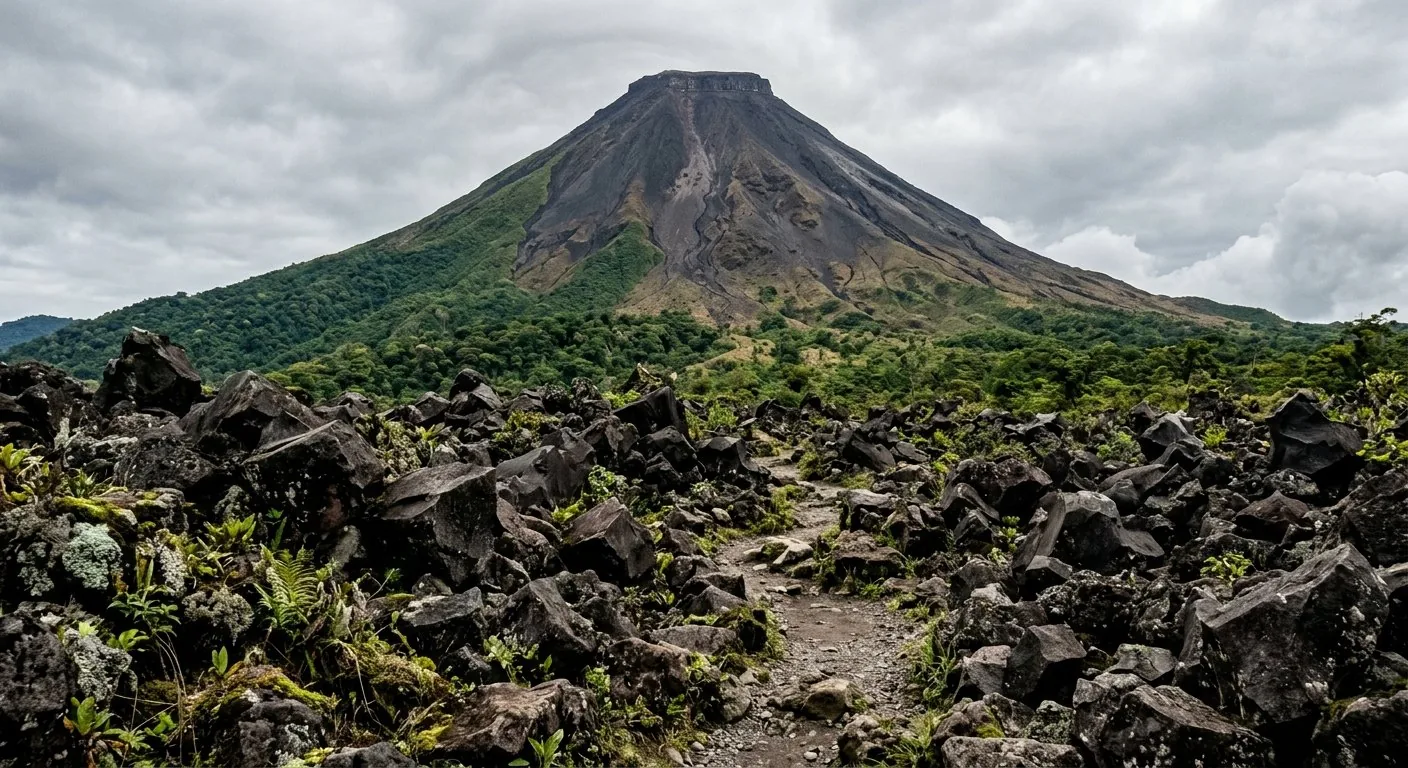
The short version
- The 1968 eruption killed 87 people in total — 78 in the initial blasts and nine more over the following days. Both numbers circulate online because both are true of different things.
- It destroyed Tabacón, Pueblo Nuevo and San Luis within minutes, across roughly 15 km². VEI 3.
- Before 1968 the mountain had been quiet for around 400 years, since an eruption dated to roughly 1430–1460. Locals called it a hill.
- The eruptive period ran July 1968 to December 2010 — 42 years of near-continuous activity, which is what made Arenal famous and what today’s marketing is still selling.
- The 4 km exclusion zone around the crater dates from 1998 and remains in force.
- Arenal has sat at alert Level 1, “Calm” since 2010 — its longest quiet stretch since the eruption began.
How long was Arenal dormant before 1968?
Roughly 400 years. The volcano’s previous major eruption is dated to around 1430–1460, and nothing credible is recorded between then and 1968. Two claimed events, in 1915 and 1922, are listed as doubtful or discredited in the eruptive record.
That gap is the reason the 1968 eruption was so lethal. Nobody living had seen the mountain do anything. It was called Cerro Arenal, Arenal Hill, and Pan de Azúcar, Sugarloaf — names for a landscape feature, not a hazard. Villages sat on its flanks. Tephrochronology later established that Arenal had been erupting on and off for about 7,000 years, with major eruptions separated by intervals of roughly 750 to 1,080 years. There was a pattern. Nobody knew it was there.
Eruptive history and dating: Smithsonian Institution Global Volcanism Program (Arenal, volcano number 345033) and Soto et al., “Eruptive history of Arenal Volcano, Costa Rica, 7 ka to present”.
Did the 1968 eruption kill 78 people or 87?
Both figures are correct, which is why both are everywhere. The total death toll was 87. Of those, 78 were killed in the initial blasts by pyroclastic surges and ballistic impacts on 29 July; the remaining nine died in subsequent events over the following days. Sources quoting 78 are reporting the first day. Sources quoting 87 are reporting the eruption.
We flag this because it is the single most-garbled fact about Arenal, and because a page that gives you one number without explaining the other is a page that copied it from somewhere.
What actually happened on 29 July 1968?
The western flank gave way and three craters opened along a line, low on the mountain rather than at the summit. What followed was a lateral blast — the mechanism that would make Mount St. Helens famous twelve years later — directing hot gas and rock sideways across the farmland below rather than upward. Tabacón, Pueblo Nuevo and San Luis were destroyed within minutes. Explosions continued on 30 and 31 July.
Accounts of the exact start time differ slightly, with 07:20 and 07:30 both reported; we have not found a primary source that settles it. What is not in dispute is that it was early morning, and that there was no meaningful warning.
What is the full Arenal eruption timeline?
- c. 5000 BC
The cone begins to form
Arenal is one of Costa Rica’s youngest volcanoes. Tephrochronology places the start of its eruptive record at roughly 7,000 years before present.
- c. 1430–1460
The last major eruption before the modern era
The most recent large eruption before 1968. After it, the mountain fell quiet for roughly four centuries.
- Before 1968
Nobody thought it was a volcano
It was known locally as Cerro Arenal — Arenal Hill — and Pan de Azúcar, Sugarloaf. Farms and villages sat on its flanks. Two reports of activity in 1915 and 1922 are recorded as doubtful or discredited.
- 29 July 1968
The lateral blast
On the morning of 29 July the western flank failed and three craters opened in a line. Lateral blasts drove pyroclastic surges and ballistic blocks across roughly 15 km², destroying Tabacón, Pueblo Nuevo and San Luis within minutes. Explosions continued through 31 July. VEI 3.
- 1968–1974
Activity settles into a pattern
The eruption did not stop. It changed character, into the persistent open-vent strombolian activity and slow lava effusion that would define the next four decades.
- June 1975
Glowing avalanches
Incandescent avalanches from the crater on 17–21 June; ash was reported as far as 26 km away, and material was deposited in the Tabacón river valley.
- 1992
The second lava field visitors walk on
Lava flows in 1992 produced what is now the Las Coladas trail. When a tour says “the lava fields”, this and the 1968 flow are what it means.
- 28 August 1993
Crater C collapses
The northern wall of Crater C partially collapsed, generating four glowing avalanches.
- 5 May 1998
Explosions, and the exclusion zone
Strong explosions produced 23 pyroclastic flows, some running up to 2 km. More than 400 residents were evacuated. The 4 km exclusion zone around the crater dates from this year and has never been lifted.
- 23 August 2000
The deaths that ended casual access
The strongest eruption since 1968 sent pyroclastic flows 2.3 km from the crater at around 80 km/h. Guide Ignacio Protti died that night; an eight-year-old American girl died on 6 September of her burns. A third person was severely burned and survived.
- 26 August 2000
The aircraft
Three days later a Cessna 208B struck the slope about 200 m below the summit in cloud. All ten on board died. They were not climbers, but the crash is often folded into stories about the mountain’s danger.
- December 2010
It stops
The last eruptive activity. Arenal had erupted more or less continuously for 42 years, and then did not.
- 2010–today
Resting, monitored, Level 1
OVSICORI-UNA holds Arenal at alert Level 1 — “Calm” — on a 0–4 scale. Seismic, deformation, gas and thermal networks run continuously. This is the longest quiet period since 1968.
Compiled from Smithsonian Global Volcanism Program bulletin reports, OVSICORI-UNA monitoring summaries, and the published volcanological literature. Where a date or figure could not be traced to one of these, it is not on this page.
Is Arenal still erupting?
No. Nothing since December 2010. That is more than fifteen years of quiet, the longest stretch since the eruption began, and it is why every photograph of glowing lava you have seen in an advert for Arenal is at least that old. The honest version of what you will see instead.
Quiet is not the same as extinct. Arenal is classified as active, it has fumaroles and gas emissions, and OVSICORI-UNA runs seismic, deformation, gas and thermal monitoring on it continuously. The alert level is 1 on a 0–4 scale, the lowest step above nothing. What “active” actually means here.
What does the timeline mean for visiting?
Two things, and they pull in opposite directions. The bad news is that the show ended in 2010 and no tour can give it back to you. The good news is that 42 years of eruption left an enormous amount to walk on: the 1968 blast deposits, the 1992 flows, and a landscape that has been re-colonising bare rock for a decade and a half in full view of anyone who wants to look at it.
The lava-field walks are the direct product of this timeline. What the 1968 field is actually like underfoot, and the difference between the national park and the 1968 reserve, which trips up a lot of people booking.
 Park entry
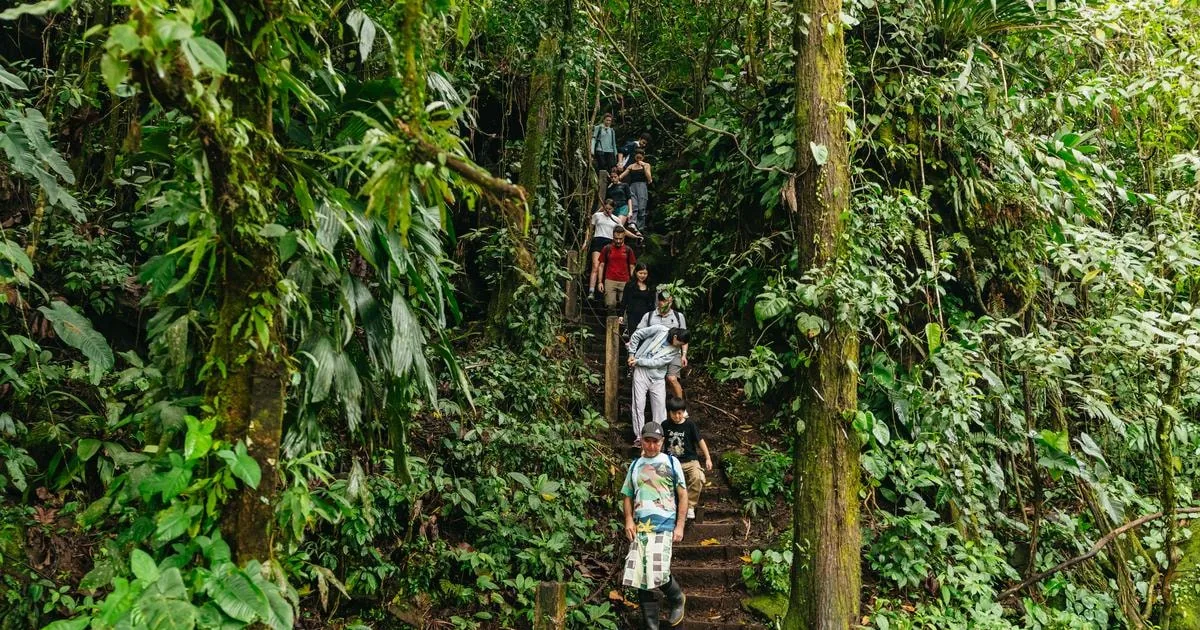
La Fortuna: Arenal Volcano Ecological Park Entry Ticket
 Most booked
La Fortuna: Waterfall, Arenal Volcano and Hot Springs Tour
 After dark
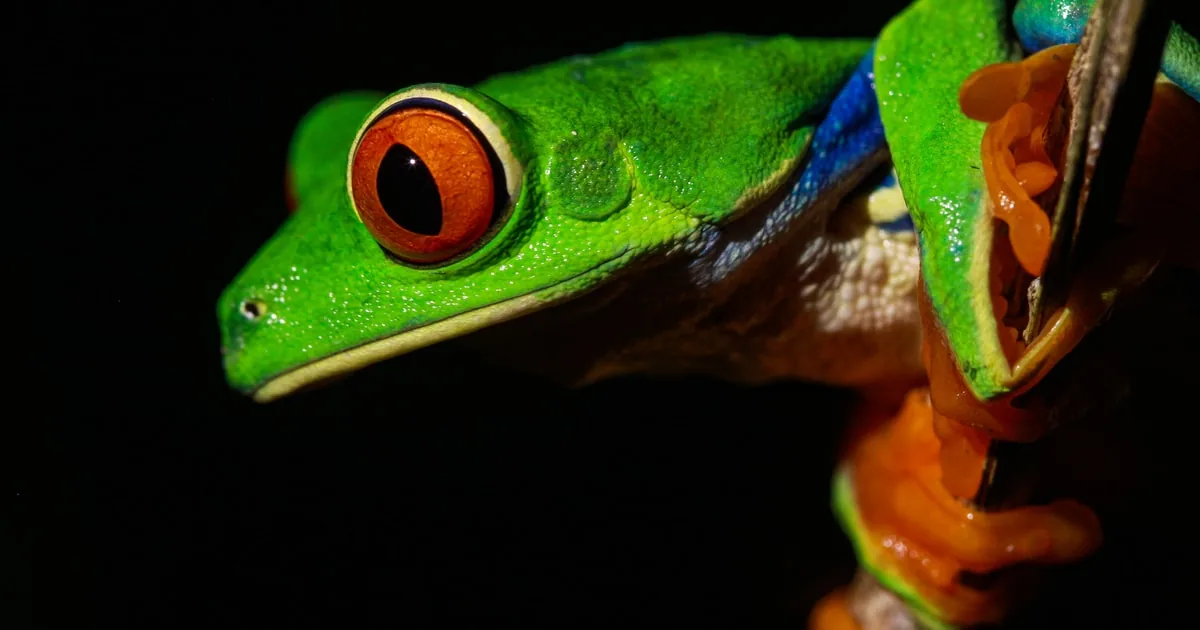
La Fortuna Night Walk at Arenal Volcano | Wildlife Tour
Frequently asked questions
When did Arenal Volcano last erupt?
December 2010. It has shown no eruptive activity since, which makes this the volcano's longest quiet period since the 1968 eruption began. OVSICORI-UNA continues to monitor it and holds it at alert Level 1, 'Calm'.
How many people died in the 1968 Arenal eruption?
87 in total. 78 were killed in the initial blasts on 29 July by pyroclastic surges and ballistic impacts, and nine more died in subsequent events over the following days. That split is why you will see both numbers quoted.
Which villages were destroyed by Arenal in 1968?
Tabacón, Pueblo Nuevo and San Luis. All three were destroyed within minutes by lateral blasts from three craters that opened on the volcano's western flank, across an area of roughly 15 square kilometres.
How long did Arenal erupt for?
42 years, from July 1968 to December 2010. It was near-continuous rather than a single event — persistent strombolian activity and lava effusion, punctuated by larger explosive episodes in 1975, 1993, 1998 and 2000.
Will Arenal erupt again?
Nobody can say when. It is an active volcano in a resting phase, not an extinct one, and the geological record shows major eruptions separated by intervals of roughly 750 to 1,080 years. It is monitored continuously precisely because the answer is unknowable in advance.