Arenal Volcano Visibility by Month
The short version
- The sky above La Fortuna is overcast or mostly cloudy 34% of the time in January and 92% in June — a near-threefold swing across the year (NASA MERRA-2 reanalysis, 1980–2016).
- The clearer season runs from about 23 November to about 11 April — roughly 4.6 months. The remaining 7.4 months are the cloudier season.
- No organisation publishes month-by-month cone visibility figures. We looked for observatory logs, webcam archives and academic work, and found none. Any site quoting you a precise "% chance of seeing the volcano" is quoting something it made up.
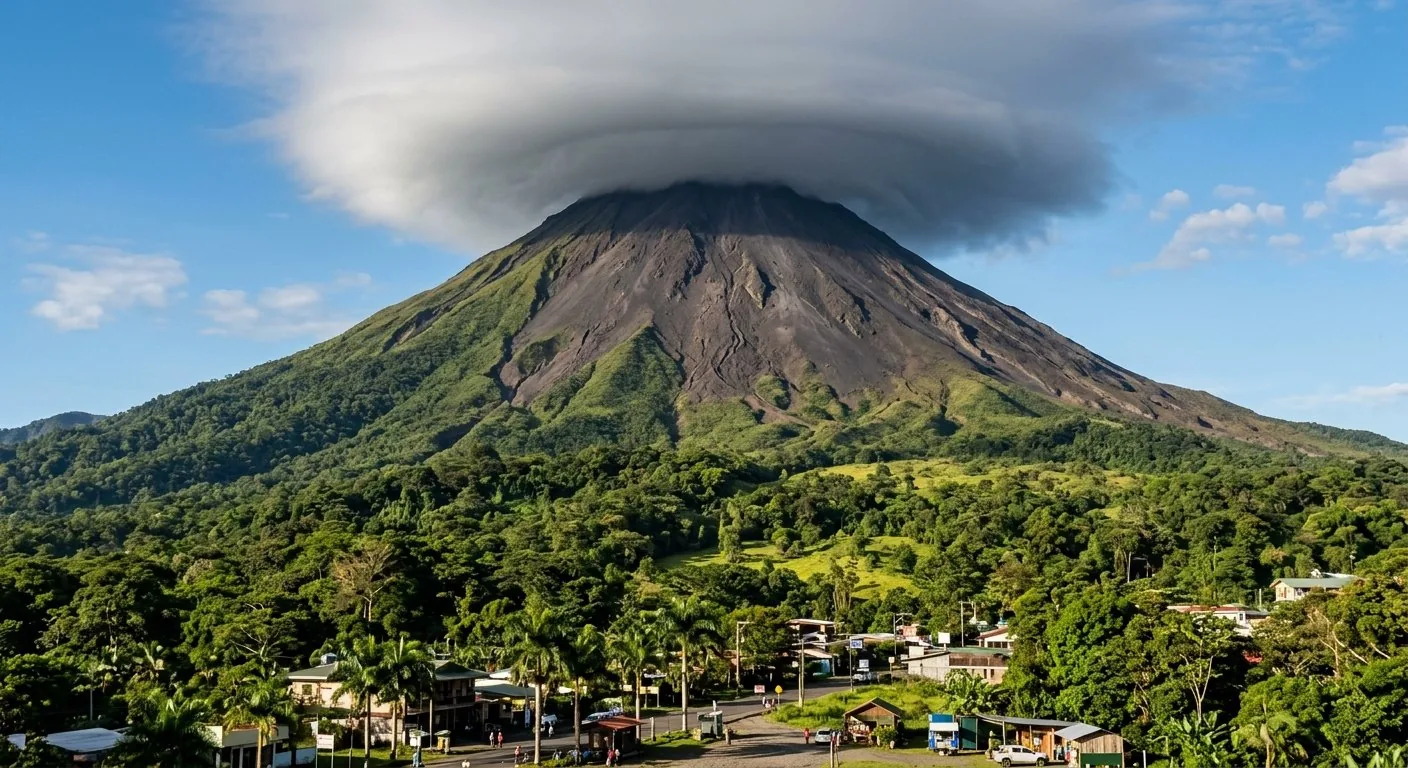
- Cloud cover over the town is an optimistic proxy. The summit is roughly 1,380 m above La Fortuna and generates its own cap cloud, so the cone is hidden more often than the town’s sky is clouded.
- Check the station behind any "La Fortuna" climate table before you trust it. We found one publishing averages drawn from a station 60 km away on the Pacific side of the continental divide — the wrong slope entirely, and a completely different rainfall regime.
- Sunrise moves very little this close to the equator: between 5:15am and 6:01am all year. The early window is short but it is always there.
Is there any real data on Arenal visibility?
No, and this is worth being blunt about, because the internet is full of pages that imply otherwise. There is no published dataset of how often Arenal’s cone is actually visible. OVSICORI-UNA monitors the volcano continuously, but it monitors seismicity, deformation and gas — not whether tourists can see the mountain. Webcams point at the cone and have done for years, but no one has published an archive of what they saw. No academic paper we could find measures orographic cloud on Arenal specifically.
So when a page tells you there is a "60–90% chance of seeing the cone on a clear day", or that there are "40 to 60 clear days a year", ask where the number came from. There is no measurement behind it. It reads as authoritative precisely because it is precise, which is what makes it worse than saying nothing.
What can be sourced instead?
Cloud cover. NASA’s MERRA-2 reanalysis models the sky over any set of coordinates using satellite and observational data, and it covers 1980 to 2016 — 37 years. It is not somebody looking at the volcano, but it is a real, consistent, named dataset with a published method, and it answers the question underneath the question: how often is the sky clear enough for the cone to be out at all?
| Month | Cloudy or overcast | Clear or mostly clear | What that means on the ground | |
|---|---|---|---|---|
| January | 34% | 66% | The best month on this measure. Dawn is your window. | |
| February | 39% | 61% | Nearly as good as January, and the driest stretch. | |
| March | 46% | 54% | Still favourable. Cloud builds earlier in the day. | |
| April | 68% | 32% | The turn. Early April behaves like March; late April does not. | |
| May | 88% | 12% | Wet season proper. Clear cone views become uncommon. | |
| June | 92% | 8% | The cloudiest month of the year. | |
| July | 91% | 9% | Marginally better than June, but not meaningfully. | |
| August | 90% | 10% | Still heavily clouded. | |
| September | 91% | 9% | Wettest stretch of the year. | |
| October | 87% | 13% | The last difficult month. | |
| November | 68% | 32% | Improving fast. The clearer season begins around 23 November. | |
| December | 42% | 58% | Back into the good window, and the busiest month to visit. |
Source: WeatherSpark, derived from NASA’s MERRA-2 Modern-Era Retrospective Analysis, 1 January 1980 to 31 December 2016. Figures are the percentage of time the sky is overcast or mostly cloudy at La Fortuna (10°28′N, 84°38′W, about 250 m elevation). The two columns are complements of one another and sum to 100%.
Why is this a ceiling and not an answer?
Three reasons, all of which push the real odds down rather than up.
The data describes the town, not the summit. La Fortuna sits at roughly 250 metres. The cone tops out at 1,633 metres. That 1,380-metre difference is the entire mechanism: moist Caribbean trade winds hit the slope, are forced upward, cool, and condense. The mountain manufactures its own cloud. You can stand in clean sunshine in town and watch a grey cap sitting on the summit, and the reanalysis will score that morning as clear.
A clear sky is not the same as a clear cone. Even inside the clearer season, the cap cloud commonly forms by mid-morning and stays. The relevant question is not what the sky did that day but what it was doing between roughly six and nine in the morning.
Arenal is on the Caribbean slope, and most Costa Rica weather advice is not. The familiar "December to April is dry season" framing describes Guanacaste and the Pacific coast. Arenal sits on the other side of the divide, catching trade-wind moisture year-round. Its drier months are genuinely drier, but there is no true dry season here in the Guanacaste sense.
If you only have one morning, buy yourself a second one. Two dawns in La Fortuna give you meaningfully better odds than one, and the park ticket is the cheapest thing you will do in Costa Rica. Most visitors book a single afternoon tour and never see the mountain.
When during the day is the cone visible?
Early. The pattern is consistent enough that every guide in La Fortuna plans around it: the cone is most often out between sunrise and mid-morning, cloud builds through the middle of the day, and the summit is usually capped by early afternoon. Occasionally it clears again near sunset. This holds in both seasons — the wet months do not remove the morning window, they just narrow it.
Sunrise barely moves at this latitude. The earliest sunrise of the year is about 5:15am in late May and the latest is about 6:01am in late January, a spread of only three quarters of an hour. Whatever month you come, being outside and looking by six is the single highest-value thing you can do. More on the morning window and why it closes.
Which months should you actually pick?
If the cone is your priority and you can choose freely: January, February and March. February and March are the driest months of the year here and sit at 39% and 46% cloud. December is nearly as good at 42% but it is also the busiest and most expensive month in Costa Rica, so you pay for the weather twice.
If you are coming between May and October, come anyway, but change what you are coming for. The forest is at its most active, the waterfalls are full, and wildlife does not care about cloud. The wet months have real advantages, and the wildlife tours are the strongest thing Arenal sells once you stop treating the cone as the whole point.
Does booking a tour improve your odds?
Not of clear weather — nothing does. What a tour buys you is an early start you would probably not organise yourself, a guide who knows which viewpoints work when the summit is capped, and something worth doing when it is. That last part matters more than people expect: on a clouded morning the difference between a good day and a wasted one is entirely down to whether the rest of the itinerary stands up on its own.
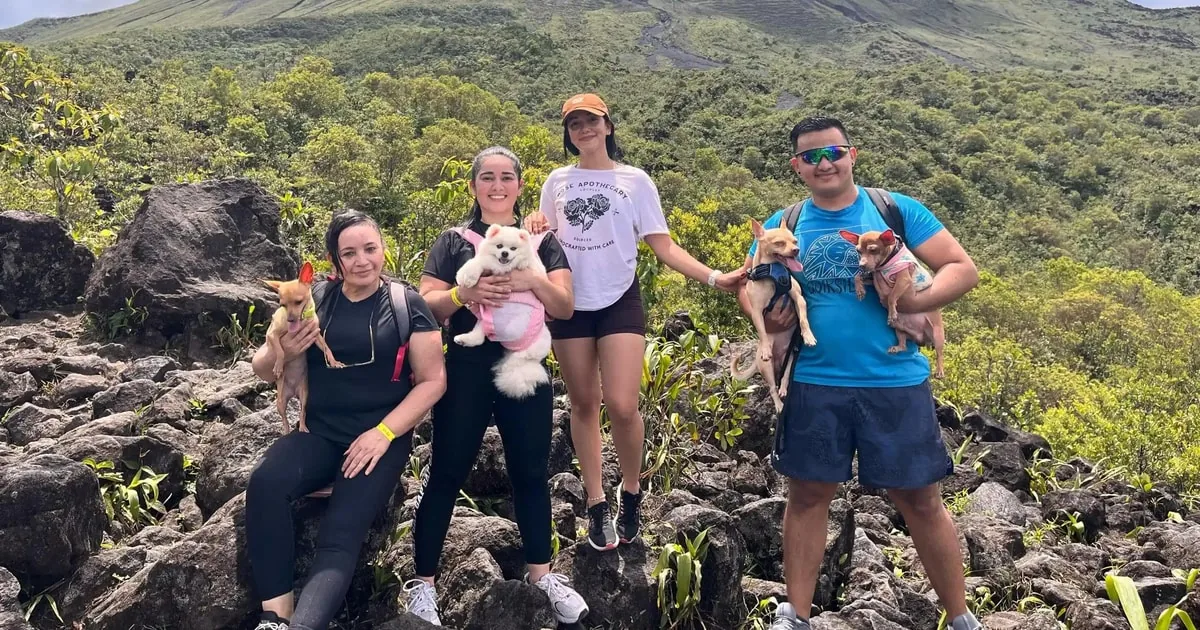 Park entry
La Fortuna: Arenal Volcano Ecological Park Entry Ticket
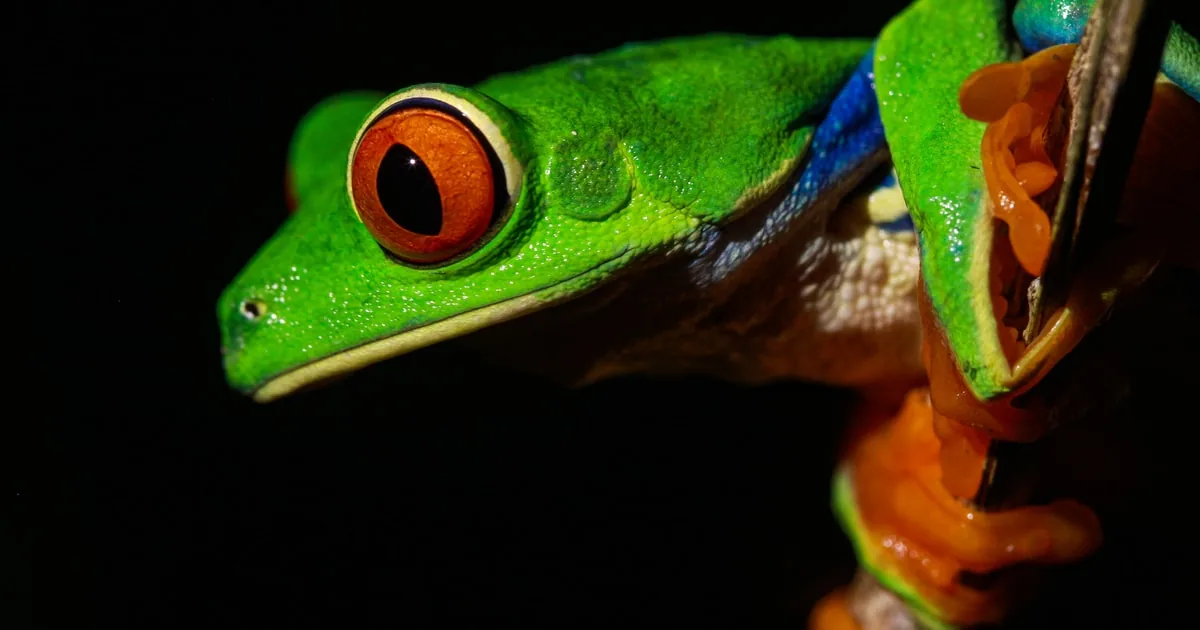 After dark
La Fortuna Night Walk at Arenal Volcano | Wildlife Tour
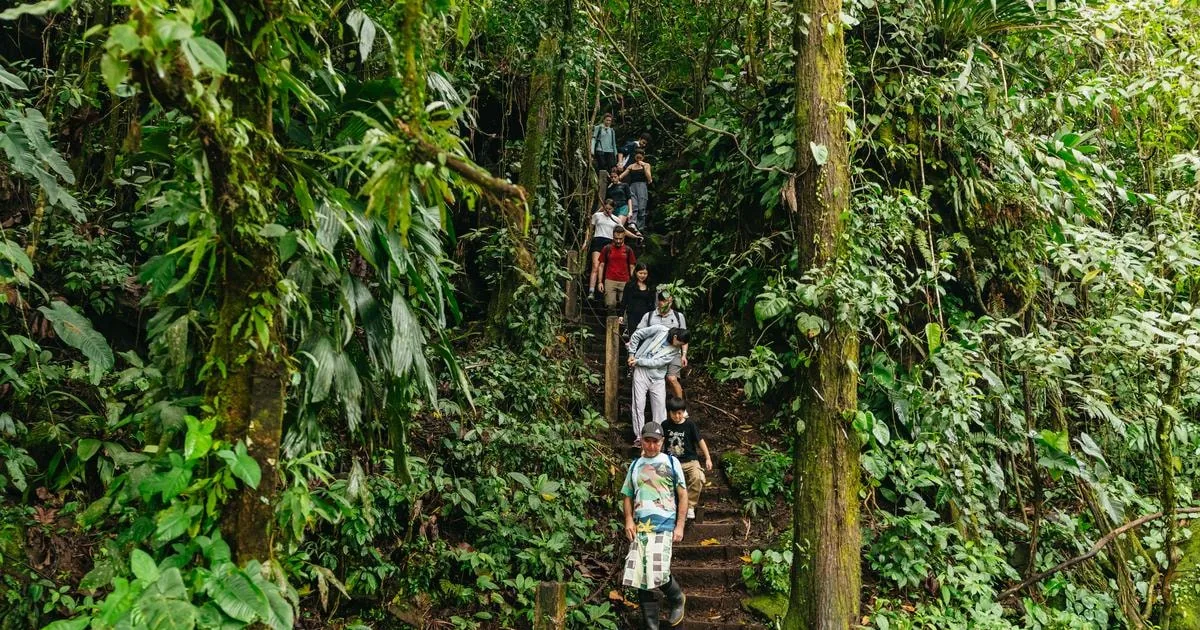 Most booked
La Fortuna: Waterfall, Arenal Volcano and Hot Springs Tour
Entry to the park is the same price booked ahead as it is at the gate, so there is no penalty for locking in a sunrise slot. See what the gate actually charges, or compare all eight tours side by side.
Frequently asked questions
What month has the best chance of seeing Arenal Volcano?
January, on the only measure that can be sourced. NASA's MERRA-2 reanalysis puts the sky over La Fortuna at overcast or mostly cloudy 34% of the time in January, the lowest figure of the year, with February at 39% and March at 46%. June is worst at 92%.
Is there a percentage chance of seeing the Arenal cone?
No published one exists. Nobody measures cone visibility — not the park, not OVSICORI, not the observatory. Pages quoting you a specific percentage are inventing it. Cloud-cover data is the closest honest proxy, and it describes the sky over the town rather than the summit.
Can you see Arenal Volcano in the rainy season?
Sometimes, and almost always only in the early morning. May to October runs 87–92% cloudy, so a clear cone becomes a bonus rather than a plan. Build the trip around the forest, the wildlife and the lava field instead.
How many days should I stay in La Fortuna to see the volcano?
Two mornings is the meaningful upgrade over one. Because the window is at dawn and the cloud is daily rather than random, a second sunrise is close to a second independent attempt, whereas a second afternoon adds almost nothing.
Why is Arenal always covered in cloud?
Moist trade winds off the Caribbean hit the volcano's slope and are forced upward, where the air cools and the moisture condenses. This is orographic lift, and the mountain drives it every day. Arenal sits on the Caribbean slope rather than the Pacific one, so it catches this moisture year-round.