What to do at Arenal Volcano if the volcano is dormant
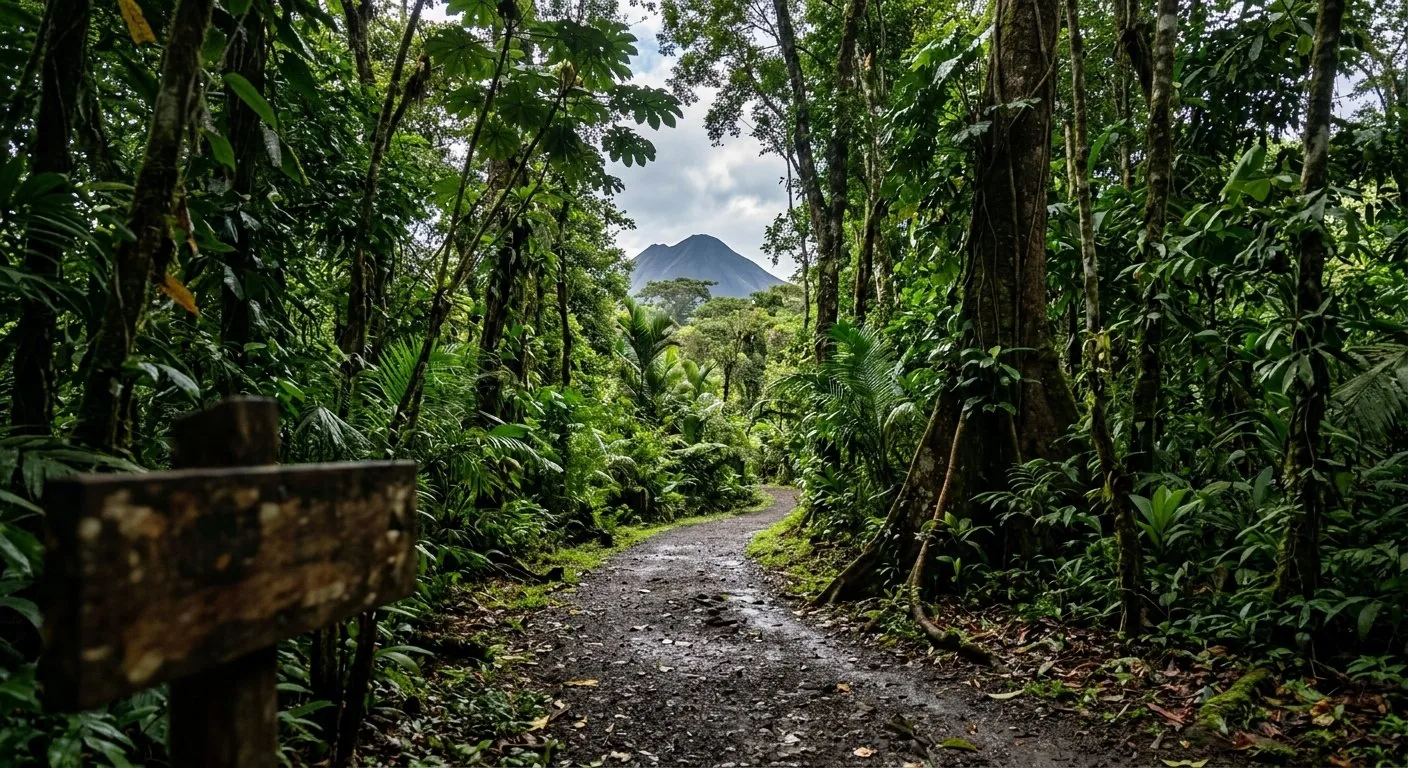
The honest answer to "is there anything to see?"
Yes, if you value geology and wildlife over eruption drama. Arenal erupted continuously from 1968 to December 2010. That phase ended. Now it is a dormant volcano, which means you cannot watch lava or ash — those ended 15 years ago. But you can do five things that are genuinely rewarding.
1. Walk on real lava
The 1968 and 1992 lava fields are tactile geological history. Black basalt, fractured and porous, shaped by the physics of cooling magma. You can see exactly how lava flows, why it fractures in hexagonal patterns, and how sparse life begins to colonise barren rock. Guides explain these things. For geology enthusiasts, it is rich. Learn more about the lava-field hike.
2. Try to see the cone
The cone itself is 1,633 metres tall and nearly symmetrical — one of the most perfect stratovolcano shapes in the Americas. From the lava fields, if clouds clear, you see it rising directly above the dark rock. Visibility is weather-dependent; early morning (6–9 AM) offers the best odds. Monthly visibility odds are here. On clear mornings, it is genuinely striking.
3. Spot wildlife
The rainforest around the volcano hosts howler monkeys, coatis, sloths, quetzals, parrots and birds you will not see elsewhere. Tours specifically focused on wildlife (the night walk or the guided safari) offer higher odds. Wildlife sightings are never guaranteed, but the forest habitat is genuine and rich. Read what species you might encounter.
4. Add adventure
The eight tours include options beyond walking: canyoning and rappelling at a waterfall, ATV rides through rainforest, hanging-bridge canopy walks, and night wildlife tours. These are not volcano-specific, but they make a Arenal trip broader than just lava fields.
5. Understand volcanic landscapes
Standing on lava that erupted 58 years ago, in a landscape slowly healing itself, teaches you something about how Earth works. Guides explain the 1968 eruption (catastrophic, killed 87 people, buried three villages), the landscape it created, and the biology reclaiming it. That is education without classroom walls.
Why this actually works
The appeal of Arenal is not spectacle; it is geology, biology, and presence. A volcano at rest is not a failed experience. It is a different one: you are walking on evidence of geological power, with guides who understand it, in a place few tourists think to go. If you value that, Arenal is absolutely worth visiting.
Browse all tours
Arenal tours range from $17 park entry to $176 private guides. All run year-round on GetYourGuide.
Frequently asked questions
What is there to do at Arenal if you can't see lava flowing?
Walk on cooled lava rock from 1968 and 1992, spot wildlife (howler monkeys, sloths, quetzals), try to see the cone on clear mornings, and learn volcano geology from a guide. Eight tours offer different activities.
Is Arenal worth visiting if the volcano is dormant?
If you love geology and wildlife, yes. If you came to watch an active eruption, no. Be honest with yourself. The lava fields are genuinely striking, but they are not spectacle—they are landscape.
What is the best tour for someone who doesn't care about adventure sports?
The park entry ticket (geology + walking), the night walk (wildlife focus), or the classic waterfall tour (mix of everything). Avoid canyoning or ATV if you want to focus on the volcano itself.