Is Arenal Volcano still active?
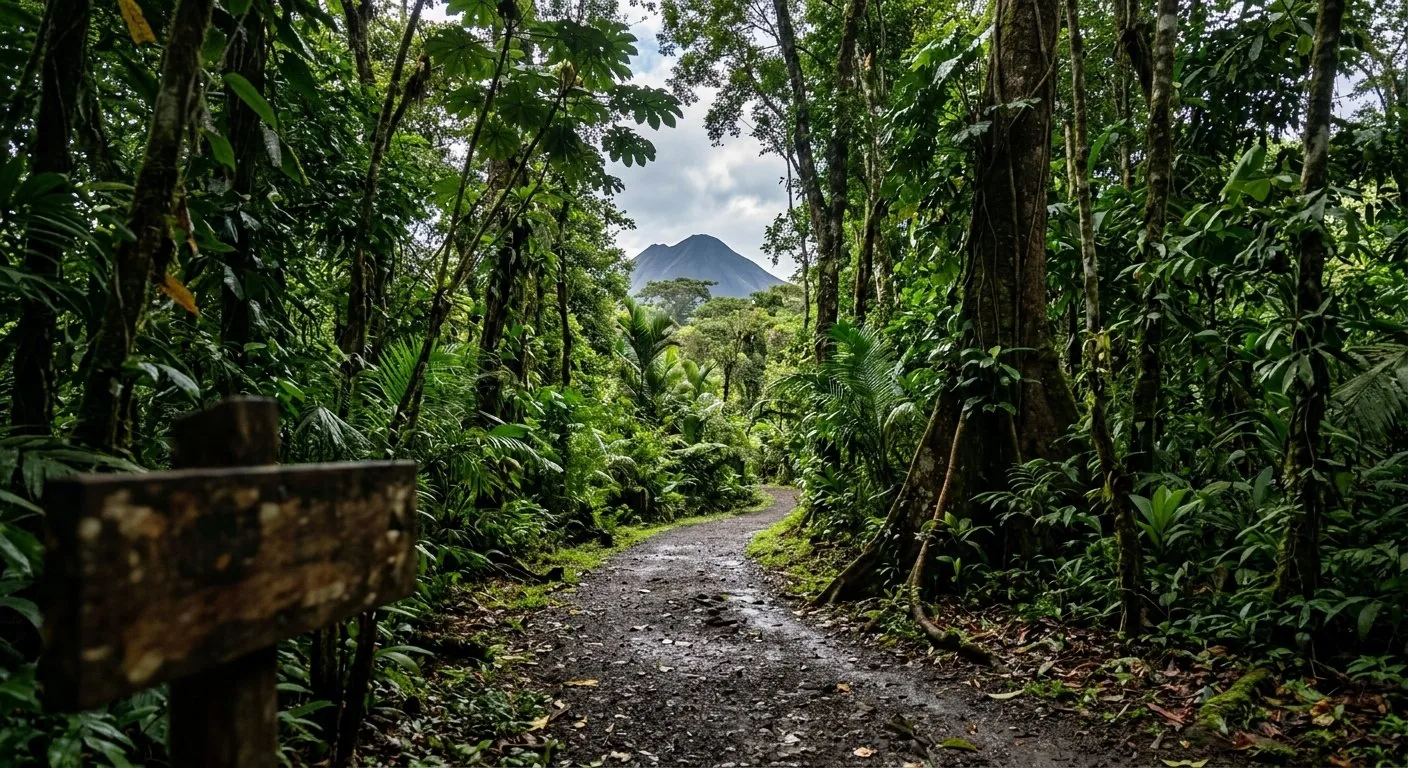
What "active" actually means
A volcano is classified as "active" if it has erupted within a defined period (usually 10,000 years) or shows signs of unrest — earthquakes, gas emissions, or ground deformation. Arenal meets this definition: it erupted as recently as December 2010 and sits on active tectonic boundaries. But "active" does not mean "erupting now." Many active volcanoes are dormant for centuries.
Dormant vs. dangerous
Arenal is dormant: it shows no signs of imminent eruption. OVSICORI-UNA maintains seismic stations on and around the volcano and publishes a real-time alert level every day. Since 2010, it has stayed at Level 1 (Calm). Level 2 (slight activity) or higher would signal unrest; those levels have not been reached. Guides walk tourists to the base of the cone daily, and the park has been open to visitors continuously. That commercial access reflects the true safety: low risk.
Why it stopped in 2010
Arenal erupted continuously from July 1968 to December 2010 — 42 consecutive years. No warning preceded the Dec 2010 stop; it simply ended, as volcanic systems do. Volcanoes are not clocks. Some erupt for centuries, some for decades. Arenal had its turn. Now it rests. Whether the next phase will be eruption, extended dormancy, or both is unknowable without future seismic data.
The 1998 exclusion zone and why the cone is closed
After the 1968 eruption killed 87 people and buried the villages of Tabacón, Pueblo Nuevo and San Luis, the area around the cone was progressively restricted. In 1998, after a period of increased activity, a 4 km exclusion zone around the crater was put in place, and it has stood since. Today, visitors can walk the lower slopes and the lava fields, but the cone itself is off limits. Read the full history of why the cone is closed.
What tourists need to know
Arenal is safe to visit. The volcano is monitored continuously. The lava fields you walk on are decades old. Guides are trained in volcano safety. If seismic activity ever rises significantly, OVSICORI raises the alert level and the park closes — but that has not happened since 2010. Tours run daily. The risk to hikers is negligible.
Ready to book?
The lava-field hike itself is moderate difficulty and geologically fascinating. You will not see flowing lava, but the cooled rock is striking. Arenal offers geology, wildlife and cone views if you set realistic expectations.
Book a tour
Arenal tours operate year-round under continuous seismic monitoring. Book on GetYourGuide for instant confirmation and free cancellation.
Frequently asked questions
If Arenal is active, is it dangerous to hike there?
No. Active means it has erupted in recent geological time, not that it is erupting now. Arenal is monitored continuously by OVSICORI-UNA at Level 1 (Calm). Thousands of tourists hike the lava fields safely each year.
What does alert Level 1 mean?
Level 1 is the lowest alert status: the volcano shows no signs of imminent eruption. Levels 2–4 indicate increasing activity. Arenal has stayed at Level 1 since 2010.
Could Arenal erupt while I am hiking?
Extremely unlikely. Volcanoes give warning signs (increased earthquakes, gas emissions, ground deformation) before eruptions. OVSICORI watches for these continuously and would close the park if they appeared.