Can you see lava at Arenal Volcano?
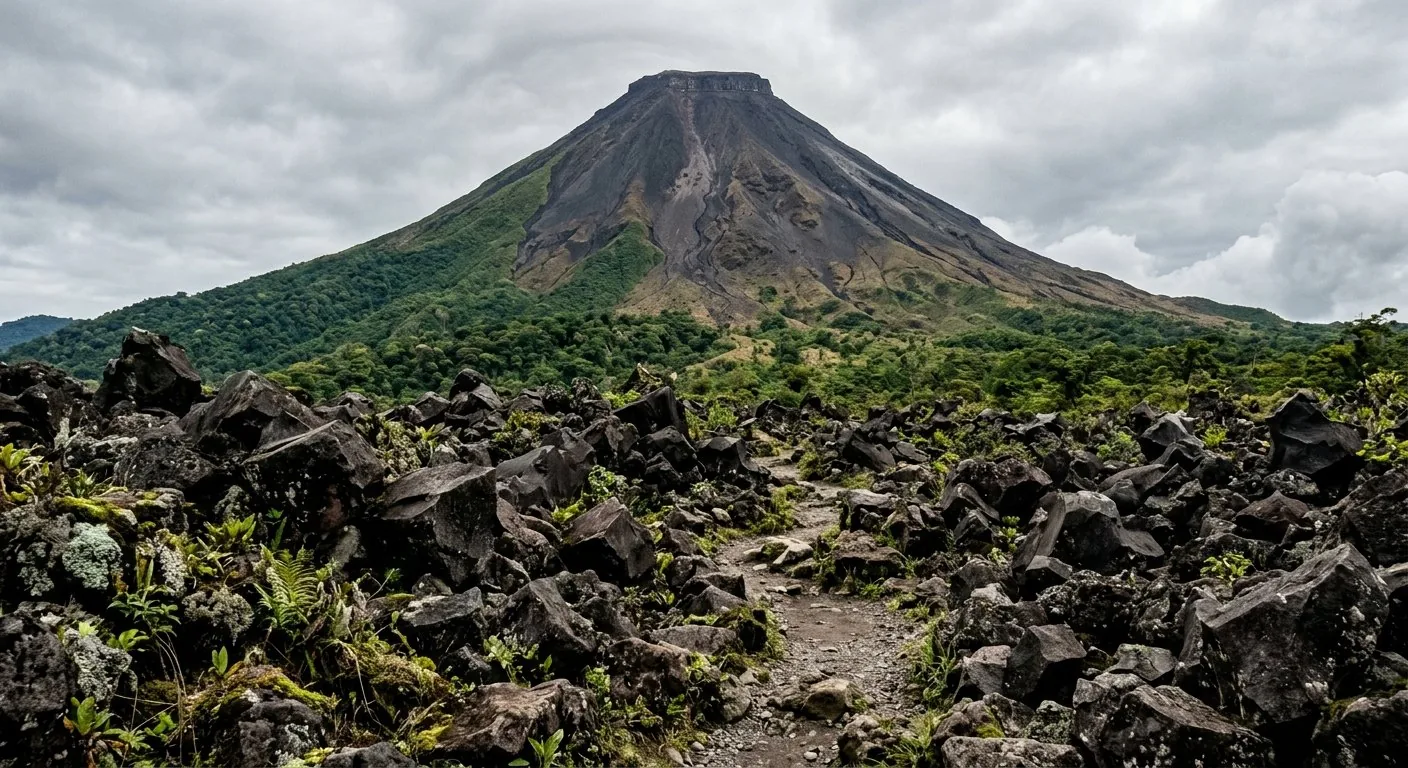
The 2010 cutoff
Arenal erupted continuously from July 1968 to December 2010 — 42 years of activity. Then it stopped. The volcano entered a resting phase and remains there. OVSICORI-UNA, the official seismic observatory, classifies it as alert Level 1, "Calm." No eruption is forecast. Tours sold as "lava tours" today are marketed as lava experiences but are actually geology hikes over rocks that cooled decades ago.
What the lava rock actually is
The rock you walk on is not exotic or rare — it is basaltic lava from the 1968 eruption (a catastrophic event that killed 87 people and buried three villages) and the 1992 flow. Black, porous, textured, and sharp to bare feet. In 15 years of resting, sparse vegetation has colonised the flows. Lichen, hardy shrubs, and occasional trees now grow on the rock. It is a landscape of geological recovery, not volcanic drama.
Why you should care anyway
Walking across real lava gives you the texture of a volcanic landscape that most travellers never experience. You can see exactly how lava cools and fractures, where gas pockets leave holes, and how new life reclaims barren ground. Geologically, it is rich. Guides explain the 1968 eruption, point out the cone’s shape and location, and share stories of the villages that were buried. For anyone curious about how volcanoes work, it is valuable. For anyone chasing eruption video drama, it is not.
The reframe: why dormant matters
A volcano at rest is not a failed experience — it is a different one. You are walking on geological history, not watching geological theatre. The 1968 eruption was catastrophic; the 1992 flow buried part of the national park. The fact that Arenal is now calm is itself a success: it means guides can walk you to the lava’s edge and explain what happened without active danger.
If you need to see active lava
There are few places on Earth where tourists can safely watch fresh lava. Mount Etna in Sicily, Piton de la Fournaise in Réunion, and Hawaii’s Volcano National Park are occasional options, but eruptions are unpredictable. Arenal had its turn; now it is a teaching volcano, not a spectacle.
What this means for your trip
If you are set on Arenal, the volcano is still active but dormant. The hike itself is geologically rewarding. For realistic expectations, read what Arenal actually offers.
Book a lava-field hike
The Arenal Volcano Ecological Park entry includes access to the 1968 and 1992 lava fields. Most tours add guides, transportation and extra activities.
Frequently asked questions
When did Arenal last erupt?
December 2010. It erupted continuously from July 1968 to December 2010 — 42 years of activity — then entered a resting phase that continues today.
Will Arenal erupt again?
Possibly, but not soon. Volcanoes are unpredictable, but OVSICORI-UNA monitors Arenal continuously at alert Level 1. No eruption is forecast or imminent.
What is the difference between a lava tour and a lava-field hike?
None technically. Both walk you across cooled lava rock. The term lava tour is marketing; the flows you walk on date from 1968 and 1992, so the rock cooled between roughly 34 and 58 years ago. If that matters to you, book the scientific or geological angle tours instead.